Free UK Mainland Delivery - 30 Days Return Policy
UK Company - UK Stocks
Need Advice Call us - 01952 502703

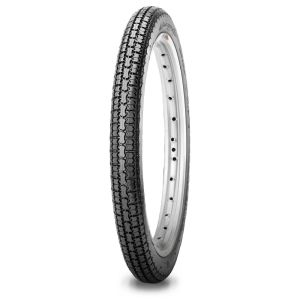
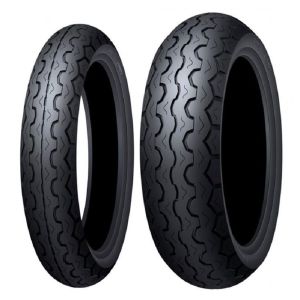
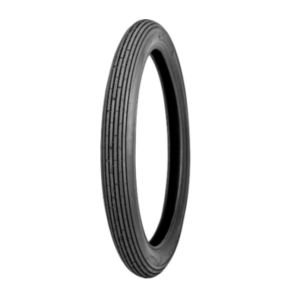
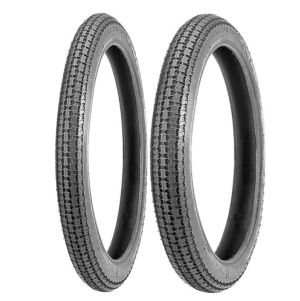

Shop By
Shopping Options
Featured

Classic, Vintage and Retro Motorcycle Tyres
Explore our range of classic motorcycle tyres for vintage machines, restored motorcycles, café racers, modern classics and retro-styled bikes. Whether you need a traditional-looking tread pattern or a modern tyre available in a classic motorcycle size, Sticky-Stuff can help you compare the suitable options.
Our range includes front, rear, universal and selected motorcycle tyre pairs from established manufacturers. Use the filters above to search by tyre size, wheel diameter, fitment, brand and speed rating. If you need help choosing, call our experienced tyre team on 01952 502 703.
What are classic motorcycle tyres?
Classic motorcycle tyres are produced in sizes and constructions suitable for older motorcycles and machines with traditionally sized wheels. Some models use period-style tread patterns intended to complement the appearance of a restored motorcycle, while others combine a classic fitment with more contemporary tyre technology.
The category can also include tyres for modern retro motorcycles and café racers. These machines may look traditional but can require different sizes, load ratings, speed ratings and tyre constructions from genuinely vintage motorcycles.
A classic appearance alone does not make a tyre suitable for every older bike. Always check the complete tyre specification and the motorcycle manufacturer’s requirements before ordering.
Tyres for different types of classic motorcycle
Restored and vintage motorcycles
Owners restoring an older motorcycle may want a tyre with a traditional profile and tread pattern. Appearance is important, but the tyre must also have the correct size, construction, load capacity and speed capability for the machine.
Modern classic motorcycles
Modern classics combine retro styling with more recent chassis, braking and suspension technology. They can use contemporary radial or cross-ply tyres depending on the motorcycle, so select tyres using approved fitment information rather than appearance alone.
Café racers and custom motorcycles
Café racers and custom builds may use altered wheels, suspension or chassis components. If the motorcycle has been modified, obtain professional advice to confirm that the proposed tyre sizes and combinations are compatible with the wheels and provide suitable clearance.
Lightweight classic motorcycles
Smaller-capacity classic motorcycles often use narrow, inch-based tyre sizes. Suitable front, rear and universal tyres may be available, but it remains important to check the permitted wheel position and whether an inner tube is required.
Classic touring and sporting motorcycles
Larger classic motorcycles can require tyres with higher load and speed ratings. Consider the motorcycle’s weight, passenger use, luggage and intended road speeds when selecting replacements.
Traditional appearance or modern performance?
Some riders want a tread pattern that closely complements the period appearance of their motorcycle. Others prioritise everyday road use and prefer a more contemporary tyre available in the correct classic fitment.
A period-style tread pattern can suit a carefully restored motorcycle, but tread appearance should not be the only consideration. Check the tyre’s intended use, construction, load index, speed rating and manufacturer guidance.
For motorcycles used regularly rather than displayed or ridden occasionally, also consider expected mileage, wet-road use and the type of journeys normally undertaken.
How to choose classic motorcycle tyres
Check the complete tyre size
The existing tyre size is normally moulded into its sidewall. Many classic motorcycles use inch-based markings such as 3.25-19 or 4.00-18, while later and modern-retro motorcycles may use metric sizes such as 100/90-19.
Do not assume that an inch-based size can be replaced with a similarly sized metric tyre. The dimensions, profile and approved rim widths may differ. Consult the motorcycle handbook, tyre manufacturer’s fitment information or a suitably experienced tyre professional before using an alternative size.
Confirm the front and rear fitments
Some classic tyres are designed specifically for the front or rear wheel. Others may be suitable for either position when fitted according to the manufacturer’s directional and wheel-position instructions.
Check the complete front and rear specifications separately, even if the motorcycle currently has similarly marked tyres on both wheels.
Check cross-ply and radial construction
Many older motorcycles were designed around cross-ply tyres, while some later classics and modern retro motorcycles use radial tyres. Do not change tyre construction or mix constructions unless the combination is approved for the motorcycle.
Check the load index and speed rating
The load index relates to the load a tyre is designed to carry under specified conditions, while the speed symbol indicates its approved speed capability. Replacement tyres must meet the motorcycle’s requirements, even when the physical dimensions appear correct.
Establish whether inner tubes are required
Many classic motorcycles use spoked or other tube-type wheels and therefore require suitable inner tubes. Tyres may be marked TT for tube type or TL for tubeless, but the wheel construction must also be considered.
A tyre marked TL may still require an appropriate inner tube when installed on a tube-type wheel, subject to the tyre manufacturer’s guidance. Always check the tyre, wheel and motorcycle requirements together.
Inspect the wheels and rim tapes
Before fitting new tyres to an older motorcycle, inspect the wheels for corrosion, damage or distortion. Where applicable, check the condition and suitability of the inner tubes and rim tapes as well.
These components can deteriorate with age and should not automatically be reused simply because they appear to fit.
Choose a compatible tyre pair
Where possible, use compatible front and rear tyres from the same product range. Mixing unrelated tread patterns, profiles or constructions can alter the motorcycle’s handling and should only be considered where the combination is approved or recommended.
Classic motorcycle tyre brands
Our range includes classic, vintage and retro motorcycle tyres from a variety of established manufacturers. Select a brand below to view the products currently available in this category:
Brand, model and size availability can change. Use the filters above to see the classic motorcycle tyres currently available for your required fitment.
Popular classic motorcycle tyre models
Our range includes traditional tread designs and more contemporary tyres suitable for selected classic and retro motorcycles. Select a popular model below to view its available sizes and specifications:
- Pirelli Phantom Sportscomp – a sporting tyre with classic styling, available in selected sizes for compatible motorcycles.
- Dunlop TT100 GP – a recognisable classic motorcycle tyre combining a traditional tread appearance with current production specifications.
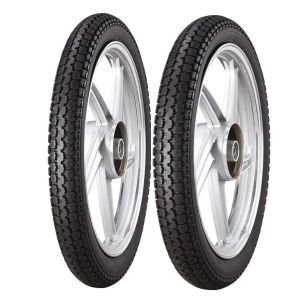
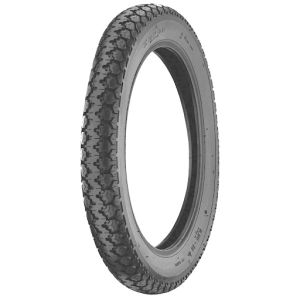
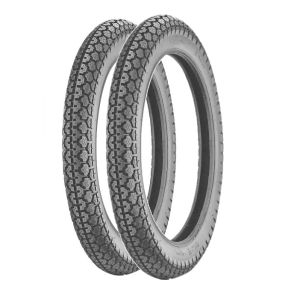
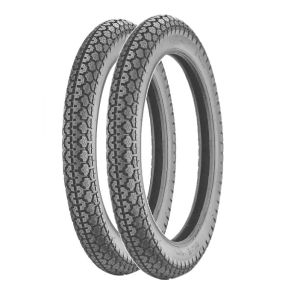
- Kenda K265 – a traditionally styled option available in selected front and rear pair combinations.
- Mitas H06 – a classic-pattern motorcycle tyre offered in a selection of traditional sizes.
- Anlas NR7 – a classic tread design available in selected pair fitments for compatible motorcycles.
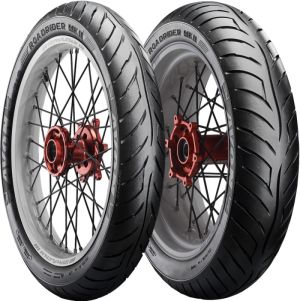
- Avon Roadrider MKII – a road tyre available in sizes suited to various classic, vintage and retro motorcycles.
- Avon Speedmaster MKII AM6 and Safety Mileage MKII AM7 – a traditional front and rear combination for compatible classic motorcycles.
Always select the correct tyre size, wheel position, construction, load index and speed rating for your motorcycle. Check whether suitable inner tubes and rim tapes are also required.
Replacing tyres on a classic motorcycle
Tyres should be inspected regularly for tread wear, cuts, cracks, bulges, embedded objects, uneven wear and other signs of deterioration. A tyre may require replacement because of its age or physical condition even when it still has visible tread.
Older motorcycles that cover limited annual mileage can retain the same tyres for a long period. This makes inspection of the sidewalls, tread grooves and overall condition particularly important.
The tyre’s date code can help establish when it was manufactured, but age alone does not provide a complete assessment of its condition. Storage, exposure, inflation pressure, load and use can all affect deterioration.
If you are uncertain about an older tyre, wheel, tube or rim tape, have it examined by a suitably experienced motorcycle tyre professional.
Classic motorcycle tyre pressures
Use tyre pressures appropriate to the motorcycle, selected tyres and intended load. Do not rely solely on the maximum pressure moulded into the tyre sidewall, as this is not necessarily the correct operating pressure.
Requirements can be less straightforward when modern tyres are fitted to an older motorcycle. Consult the tyre manufacturer, motorcycle documentation or an experienced tyre specialist if the original information does not clearly apply to the replacement tyre.
Pressures should normally be checked when the tyres are cold and adjusted where necessary for passenger or luggage use in accordance with the applicable guidance.
Order classic motorcycle tyres from Sticky-Stuff
Sticky-Stuff is a UK motorcycle tyre and accessories specialist supplying tyres for classic, vintage, restored and retro-styled motorcycles. Our team can help you compare available options and check the specifications required for your bike.
Browse our classic motorcycle tyres above or call us on 01952 502 703 for friendly product advice.
Have the motorcycle’s make, model and year, together with its current front and rear tyre sizes, available when contacting us. Details of the wheel type and any modifications can also be helpful.
If you need further assistance, contact the Sticky-Stuff team.
If you would like us to fit tyres purchased from Sticky-Stuff at our premises in Telford, view our motorcycle tyre fitting service, prices and booking information.
Frequently asked questions
How do I find the correct tyre size for a classic motorcycle?
Check the markings on the tyre sidewall and compare them with the motorcycle handbook or approved fitment information. Record the complete front and rear sizes because many motorcycles use different specifications on each wheel.
Can I replace an inch-sized tyre with a metric tyre?
Only when the alternative size is confirmed as suitable for the motorcycle and wheel. Inch and metric sizes that appear broadly similar may have different dimensions, profiles and approved rim widths. Do not make a direct conversion without checking.
Do classic motorcycle tyres require inner tubes?
Many do, particularly when fitted to traditional spoked or tube-type wheels. However, the requirement depends on both the tyre and wheel. Check the tyre marking, rim construction and manufacturer guidance before fitting.
Can a tubeless tyre be fitted with an inner tube?
A tubeless-marked tyre may sometimes be used with an appropriate inner tube on a tube-type wheel, but this depends on the tyre, wheel and motorcycle. Follow the relevant tyre and motorcycle manufacturers’ guidance.
Should inner tubes be replaced with new tyres?
The inner tube should be inspected and its age, size and condition considered whenever a tyre is replaced. Reusing an old or damaged tube can compromise the installation. Ask the tyre fitter whether a new tube and rim tape are required.
Can I mix different front and rear tyre models?
A compatible matching combination is generally preferable. Mixing different ranges, constructions or substantially different tread designs can affect handling and should only be done when the combination is approved or recommended.
Can I fit radial tyres to a motorcycle originally using cross-ply tyres?
Not without confirming that the change is approved and suitable. The motorcycle’s wheels, chassis and handling characteristics may have been designed around a particular tyre construction.
Are modern tyres suitable for vintage motorcycles?
Modern-production tyres can be suitable when they have the correct size, construction, load rating, speed rating and approved use. Some provide a traditional appearance, while others have a more contemporary tread pattern.
How old is my motorcycle tyre?
The manufacturing date is normally included within a code on the sidewall. On recent tyres, the final four digits generally identify the production week and year. If the marking is unclear or the tyre’s condition is uncertain, ask a tyre professional to inspect it.
Can Sticky-Stuff help me choose classic motorcycle tyres?
Yes. Have the motorcycle make, model and year, its current front and rear tyre sizes, wheel type and details of any modifications available. Call our tyre team on 01952 502 703 or contact us for assistance.
Can Sticky-Stuff fit my classic motorcycle tyres?
Yes. Motorcycle tyre fitting is available at our premises in Telford for suitable tyres purchased from Sticky-Stuff. View our fitting service, prices and booking instructions.
Select by Brand
Avon - Continental - Dunlop - Kenda - Metzeler - Michelin - Anlas
Select by Popular Models
Phantom - TT100GP - K265 - H06 - NR7 - Roadrider MK2 - Speedmaster Mk2 AM6 & Safety Mileage AM7